What ‘Yes, And’ Really Means – And Why It Changes How You Listen.
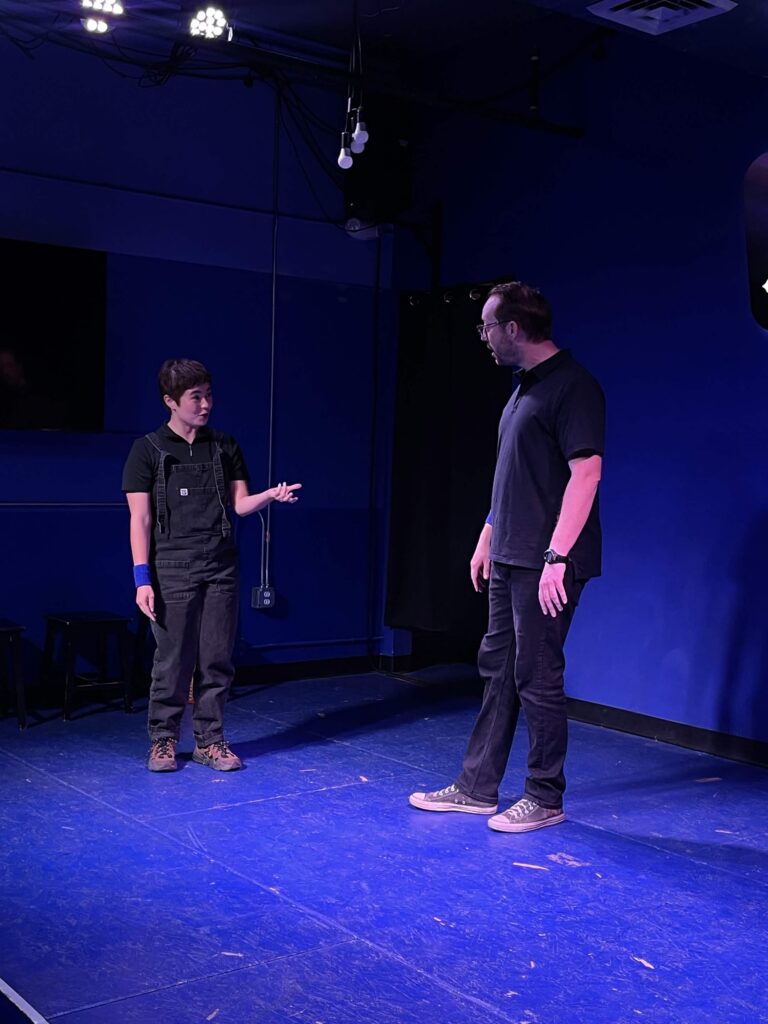
A few weeks ago, during the Saturday night Competitive Comedy show, in a game called Blind Freeze, a performer marched onstage cradling what he introduced as his “emotional support watermelon.” Big laugh — easy to move on. But a few scenes later, another performer, reached back and folded that same watermelon into her own scene, (even Bigger laugh) like it was the most ordinary object in her scene. That callback, not the joke itself, is the thing we actually teach. It is “Yes, And.”
“Yes, And” is the most quoted phrase in improv. It is printed on t-shirts. It turns up in TED talks about corporate culture. And it is, almost always, misunderstood. People hear it and assume it means “agree with everything.” It does not. The watermelon shows the real shape of it. Someone made a clear choice: this object matters. the other performer had options — ignore it, or treat it as true and build. She built. Two moves, and a throwaway offer became a bit the whole room was in on. That is the pattern. Once you can see it, you start noticing it everywhere — including in the conversations you have all day long, where most people are quietly doing the opposite.
What it actually means
“Yes” is a perception check. It says: I heard you, I see what you are doing, we are building the same thing. It is not moral agreement — a scene partner can announce that their character robs banks, and you still say yes. You are not endorsing the robbery. You are confirming that, in the world that you are all creating, that is now a fact.
“And” is the contribution — what you add on top. Not a redirect, not a correction, not a bigger joke that ignores what just happened. Watch how it ran in a recent Competitive show: one performer, Jordan, grabbed a coconut bra and declared, “they’re my coconuts.” The “and” came from everyone else. The rest of the cast did not pause to question the coconuts — they used them for more comedy. Nobody reset the scene. The bit grew, beat by beat, because each person said yes and then pushed it one notch further.
Why it is harder than it sounds
Most people, learning improv, hear “Yes, And” and immediately do one of two things. They say “yes” and then add something unrelated — we call that “premise surfing” which quietly kills the scene.
The hard part was never the saying-yes. It is the half-second before: actually listening to your partner as if they are more interesting than whatever you had loaded up to say. That is the muscle. the watermelon was only funny because people were listening instead of thinking about their next line.. “Yes, And” forces you to put down your prepared idea and pick up what is genuinely in the room.
How you practice it
There is a drill we run in our Level One intro to improv class that takes about three minutes. Two people sit facing each other. Person A says a sentence. Person B answers with a sentence that begins with the literal word “yes” and the literal word “and.” Then A does the same. Back and forth, five exchanges — that is the whole exercise.
It sounds simple. It is not. Somewhere around the third exchange, your partner says something you did not see coming, and as you catch yourself already building your next line, you have to remember. “Yes, And” only works if you let their thing change yours. The drill trains you to notice those details. — And then you have to drop your plan.
Take it out of the classroom and it works in meetings, in arguments, at the dinner table. Not because everything becomes improv, (although it is) but because most people, most of the time, are not really listening. The instant you do, you become the person they want to keep talking to. After seventeen years of teaching this, that is still the part that sticks.
| This Week at NCT On stage: The Competitive Comedy Show — Saturday, May 23 at 7:30 PM (doors 7:00). All-ages improv built entirely from audience suggestions: you shout out ideas and pick the funniest team. Get tickets. In the classroom: Session 4 Level 1 — Intro to Improv starts Wednesday, July 1. No experience required. Six weeks. One showcase. Save your spot. |
Where is NCT located?
NCT shares a space with The Sacred Pint Taproom in Downtown Mesa.
When head in and look for the secret door marked with our logo.
You’re exactly where you need to be!”
Can we get tickets at the door?
Yup, but its always way faster to buy them online.
Is there a drink minimum?
Nope, there is no drink minimum but supporting the sacred pint would be cool.
Where do we park?
There are over 5,000 FREE parking spaces available in Downtown Mesa every day!
Is there places to eat downtown?
Heck Ya! Here are some awesome restaurants in our Neighborhood.
Wanna learn more about NCT?
Check out all the cool live shows and Improv classes we do.